Saturday, April 30, 2016

Weekly blog 4/25 - 29/ 16


Summary: 
          The deciduous forest is a temperate broad-leaf forest. The deciduous forest has rivers, streams and other water resources. The deciduous forest has eatable plants that can keep you alive. Some animals that live in the deciduous forest are black bears, eastern chipmunks, coyotes and many more. Some plants that live in the deciduous forest are Lade Ferns, American Beech trees, Mongolia's  and many more. 


S&EP: SP1: Asking questions and defining problems: SP1: Asking questions and defining problems:
          I was working on page for a website that is about surviving in the deciduous forest. I had to figure out if the deciduous forest has food and water that people can eat and drink. I searched for resources that might help me figure this out and I found that the deciduous forest has drinkable water and eatable food. The water resource that I used for the website is a river and the food that I put is berries and fruit.

Sunday, April 24, 2016

Project Blog for message in a bottle


Summary:
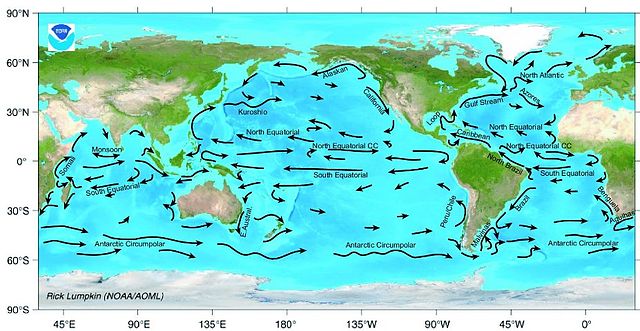
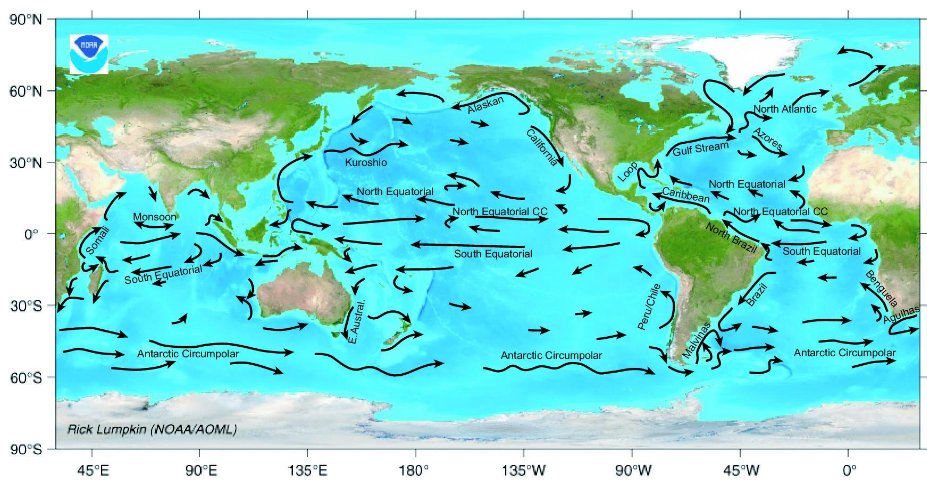
Ocean currents are caused by wind currents. Ocean currents can carry objects all over the world. Objects can make it to places you would not expect because of ocean currents. Cold water is more dense than hot water. Salt water is more dense than fresh water.The more dense something is the more it skins. The less dense something is the more is rises.


Backward-looking:
I knew that heat rises and that cold sinks. I also knew that ocean currents can carry objects around the world. I knew that ocean currents can take objects to unexpected places.  I did not know that all of the ocean currents had different names and where they all are.  I also did not know that the wind currents effected the ocean currents.


Inward-looking:
I feel like we should have had a little more time on this project. I liked making up the story because I got to use my imagination. I disliked drawing the map because I could not draw a clear picture so I had to trace it. I also did not like having to do some of the work because I did not know how to do it at first. I enjoyed getting to see my map when it was done because it ended up looking really cool.


Outward- looking:
I personally would give my self an A because I worked hard on my project. I would also give myself an A because I feel like I did a good job on the work. I would not give myself an 100% because I feel like I could have done better if I had a little longer time and help. I do not know exactly what the teacher wanted but I did try hard to get an A.


Forward- looking:
If I had to re-do this project over again I would make sure that I would not spend to much time on the map. I would also do more work on the story and the other things that I typed. I would make sure that I looked more at the rubric so that I could feel more confident on what I did. I think that I could have re-done a lot of things and I wish that I would have done those the first time.


Saturday, April 16, 2016

Weekly blog 4/11 - 15/16


Summary:
Saltwater is heavier than fresh water. Salt water sinks while fresh water stays at the top Cold water is heavier than hot water. Cold water sinks while hot water stays at the top. Ocean currents are all around the world and can take things around the world. A gyre when wind and the rotation of the earth cause the ocean to form a large circle. Objects can get stuck in a gyre like trash and can collect until it becomes like an island.


S&EP:SP2: Developing and using models: Did you build a model, draw a picture, created a concept map, etc?:
This week I drew a map of part of the world for a project. I did this because I have to show which currents a message in a bottle took. I know where the bottle started and ended so that I can see which currents the bottle took. It took me a long time to draw the map because I could not draw the area's clearly so I restarted and made them more clear.


Sunday, April 10, 2016

Weekly blog 4/4 - 8/16


Summary: 
Nike sneakers fell into the ocean and have been carried all over the place by ocean currents. Ocean currents are mostly or all caused by wind. Waste in the ocean spreads all around the ocean and pollutes the ocean. The waste spreads spreads faster because of ocean currents. Wastes collides and takes over lots of the ocean and most of the pollution starts on land.


S&EP:Developing and using models: Did you build a model, draw a picture, created a concept map, etc?
This week made a model of the ocean and toxic waste. We first filled a tub with water, then we added to rocks as land. Then we added ice. We got 4 colored food colorings and added 4 drops of each except for the yellow we added 8 drops. We observed which of the colors spreaded the most. My team and I observed that the yellow spread the most out of all the colors. We also observed that the colors did not collide until we blew some wind through the straws. We noticed that the color blue spread away from the ice. We also noticed that the green took over.

Friday, March 18, 2016

Who killed the fish? WAC


https://static.wixstatic.com/media/57c273_684ff45bd2fb476fbbc7763eb67dc598.jpg/v1/fill/w_
718,h_525,al_c,q_85,usm_0.66_1.00_0.01/57c273_684ff45bd2fb476fbbc7763eb67dc598.jpg


Have you ever seen  dead fish and wonder what killed it? In the Grey area there are lots of fish dying caused by pollution. We do not know what is causing all of the fish to die so we can not fix it yet. I think that Sandy Trapp is causing most of the pollution. Sandy Trapp is the owner of the golf course. People in there homes are also causing the phosphates.

The golf course uses fertilizer. Fertilizer has phosphates that runs into the river. Phosphates are bad for a river because they can harm wildlife. Sandy Trapp said, “We need to add more fertilizer and water to our lawn.” This is showing that she adds lots of fertilizer and water to her golf course’s lawn and she waters the lawn which causes the phosphates to run into the river.

The golf courses drainage has lots of phosphates from the fertilizer. I know this because me and my team did a test on The Cattle ranch drainage, The Golf Course drainage and The Small Town drainage. The golf course drainage was the only drainage that had too many phosphates. I know that the golf course drainage had phosphates because we dropped a liquid in that would change color if the water had phosphates.

The local people are also causing the phosphates with fertilizer. The local people use fertilizer for their grasses. Sometimes the fertilizer will run into the river causing the river to have more phosphates. In the text it says, “At Lake Tohoe, the phosphates are coming from the fertilizer at golf courses and homes.”

I believe that phosphates are causing most of the pollution. The phosphates are coming from the golf course and local homes. The golf course uses fertilizer and fertilizer has phosphates. There are phosphates in the drainage from the golf course. The local homes are also using fertilizer that gets in the river. Next time you look at a river think about all the small things that cause a huge impact on the environment.


Friday, March 11, 2016

Weekly Blog 3/7 - 3/11

https://upload.wikimedia.org/wikipedia/commons/thumb/7/74/River_algae_Sichuan.jpg/576px-River_algae_Sichuan.jpg

Summary:
Phosphates can help cause algal blooms and an algal is the picture above. Phosphates are in fertilizer and cow manure and algal blooms can harm wildlife in the river. A local golf course is the main problem of the phosphates because they use fertilizers that run into the river when they water the grass. Oil is also polluting the rivers. There are three possibilities, the oil refinery, the tanker oil and the car oil. The car oil is what is polluting the river. I think that the main thing polluting the river is the phosphates coming from the golf course.


S&EP:SP1: Asking questions and defining problems
This week I asked the question, what is the main reason that the fish are dying. I know that the possible answers are, chlorine, acid rain, sediment, Parallel park, James pond (phosphates) and oil. I know that some of the answers did not have very much proof about it being them and that some did. I went over all of the possible answers and looked at the ones that I think are probably the problem. I ended up with James pond and oil. I asked some people on their opinion and I ended up with the phosphates from the golf course.

Sunday, March 6, 2016

Weekly blog 2/29-3/4

https://static.wixstatic.com/media/57c273_00edd160ed644547924df90feffcc018.jpg/v1/fill/w_718,h_525,al_c,q_85,usm
_0.66_1.00_0.01/57c273_00edd160ed644547924df90feffcc018.jpg

Summary: Acid rain is rain with more acidic chemicals than usual. It is OK if water is a little bit acidic but if it is to acidic it could affect the eco-system. The acid rain is mostly caused by cars and factory's. Sediment is dirt and other hard materials that are in or out of a stream. In the article it says that some things that sediment pollution can do to water life is "Sediment can cover the rocky bottoms of rivers and them fish (like salmon) can't dig holes they need to lay their eggs. Sediment can smother the eggs of water insects and suffocate newly hatched insect larvae. Sediment can damage of clog fish gills so they can not breathe. Ir can cut the light, making it hard for the water plants to grow. It can darken the water so it absorbs more of the suns heat."


S&EP: Engaging in argument from evidence: Did you participate in a class discussion providing evidence for your answers, and/or used the ACE strategy in your work?
This week I used the ACE strategy in my quiz's. ACE stands for Answer, C stands for Cite evidence and Explain. For example on of the questions on our quiz was "Where might the sediment be coming from?" I would answer that by saying something like, the sediment could be coming from people cutting down trees. Juan Tuno says, "I do know that logging, cutting down trees for lumber, can cause erosion. When trees are cut down, they don't hold down the soil anymore and the soil gets washed into streams, especially if workers log close to streams." Juan gives more details on where the sediment might be coming from.